The science

What is actually ageing, and what can be moved

Ageing is not one process. It is a set of interacting failures in energy production, damage clearance, signalling fidelity and immune regulation — each with a literature of its own, each at a different stage of maturity. Below: the mechanisms we write about most, with an honest note on how far the human evidence goes.

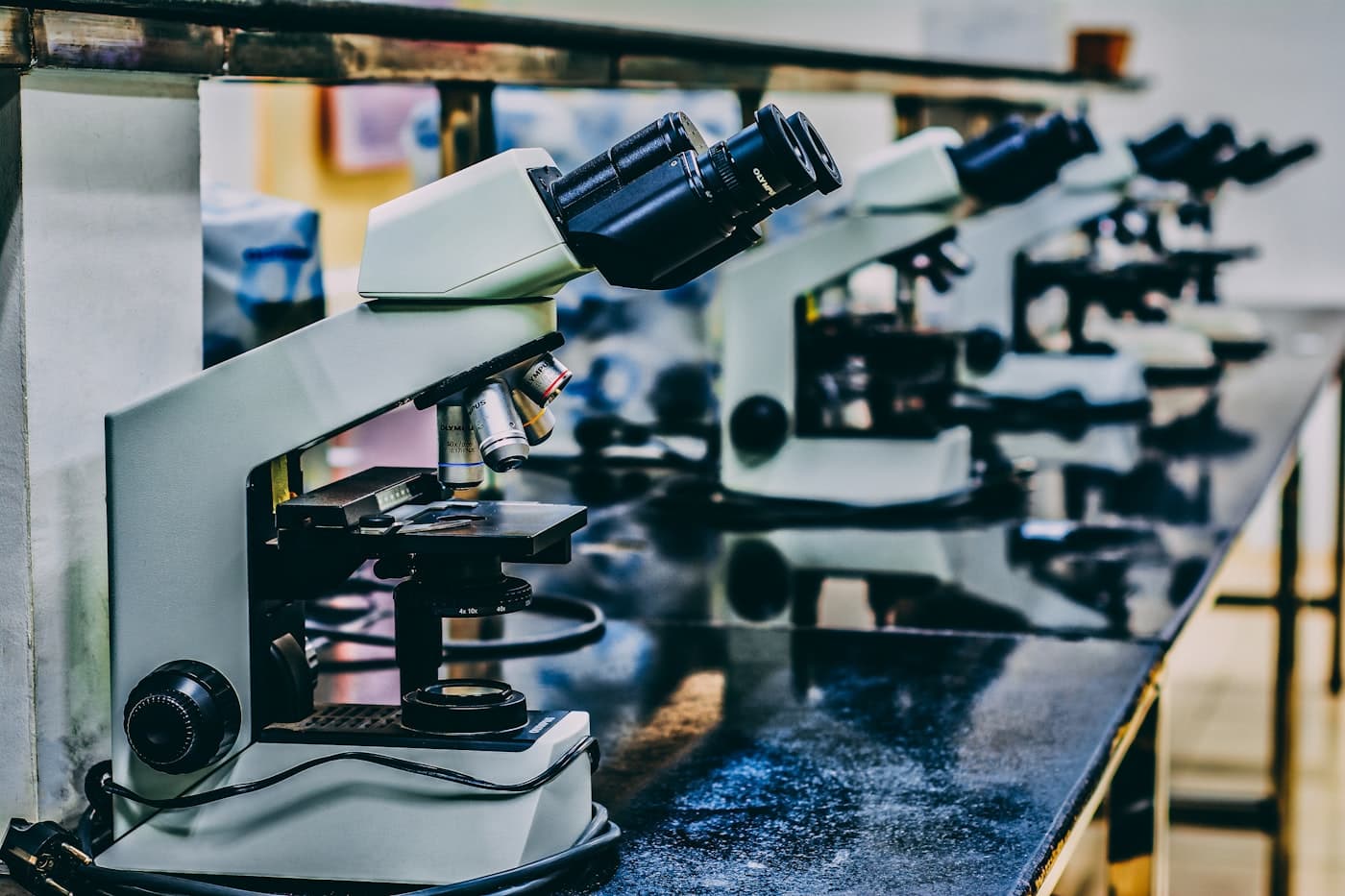
A microscope on a laboratory bench
Plate VI — six mechanisms, one organism.
Ousa Chea · Unsplash License

01

Mitochondrial function and NAD+

Mitochondria convert substrate into ATP and, in the process, generate reactive species and signalling molecules. With age, mitochondrial density and quality control (fission, fusion, mitophagy) decline, and NAD+ — the cofactor sirtuins and hundreds of dehydrogenases depend on — falls in several tissues. Aerobic training and heat exposure remain the best-supported ways to increase mitochondrial capacity; NAD+ precursor supplements raise blood NAD+ in humans, but clinical benefit is not established.

Evidence — training: strong · precursors: preliminary

02

Nutrient sensing — mTOR, AMPK, insulin

Cells decide between growth and maintenance through a small set of sensors. Abundant amino acids and insulin push mTORC1 toward synthesis; energy scarcity activates AMPK and shifts the cell toward catabolism and repair. Sustained caloric surplus keeps the growth arm switched on, which extends lifespan in no model organism studied. The open question in humans is dose and timing, not direction — and muscle mass in older adults needs the growth arm too, which is why blanket restriction is poor advice.

Evidence — mechanism: strong · human lifespan effect: unproven

03

Autophagy and proteostasis

Proteins misfold; organelles wear out. Chaperones refold what they can, and autophagy digests the rest. Both capacities decline with age, and the debris accumulates — a common thread through neurodegeneration, sarcopenia and cardiac stiffening. Fasting, exercise and sleep all raise autophagic flux in animal tissue; measuring it non-invasively in a living person remains an unsolved problem, so anyone quoting you an autophagy timer is overstating what is known.

Evidence — biology: strong · human measurement: not yet possible

04

Senescence and inflammaging

Damaged cells that stop dividing but refuse to die secrete an inflammatory cocktail (the SASP) that ages the tissue around them. Layered onto visceral adiposity, poor sleep and periodontal or gut-barrier inflammation, this produces the chronic low-grade state often called inflammaging — measurable, crudely, as hs-CRP. Senolytic drugs are a live research field, not a consumer protocol. Reducing the inflammatory inputs you control is the part that is actionable today.

Evidence — association: strong · senolytics in humans: experimental

05

Epigenetic drift and the clocks

Methylation patterns shift with age in ways regular enough to build predictors from — the DNA-methylation clocks. They correlate with mortality risk at population scale. Whether an individual’s clock reading responds meaningfully to a lifestyle change within months, and whether that response means anything biologically, is contested. Useful as a research instrument; premature as a scoreboard.

Evidence — population correlation: strong · individual use: weak

06

Gut ecology and barrier integrity

The microbiome ferments what we cannot digest, produces short-chain fatty acids, and sits behind a single-cell barrier whose leakiness feeds systemic inflammation. Traditional Indian diets are unusually rich in the fermentable fibre and fermented foods this ecology needs — one place where classical dietary practice and current microbiome research point the same way. Commercial probiotic strain claims, on the whole, run well ahead of their trials.

Evidence — fibre & fermented foods: good · strain-specific claims: weak


A starting panel

What we track, and what it reflects

Ordinary tests, widely available, read as a system. Ranges and interpretation belong to your physician — this is a reading guide, not a diagnosis.

MarkerWhat it reflectsWhy we watch it
Fasting insulin & HbA1cNutrient-sensing tone over weeksMoves earliest and responds fastest to diet and movement
ApoBAtherogenic particle countA better read on cardiovascular risk than total cholesterol
hs-CRPLow-grade systemic inflammationCrude, but the cheapest window onto inflammaging
Vitamin D, B12, ferritinCommon Indian deficienciesFatigue attributed to ageing is often one of these
Grip strength, VO₂ estimateFunctional reserveTrack healthspan better than most blood values
Sleep duration & regularityCircadian orderUpstream of nearly everything else on this list

Two vocabularies

Where classical frameworks and modern biology rhyme — and where they don’t

Agni · digestive fire

Describes territory a modern reader would call digestive capacity and metabolic flexibility. Suggestive, not equivalent — the classical concept carries claims the modern one does not.

Ojas · vitality, reserve

Maps loosely onto physiological resilience: recovery capacity, immune competence, functional reserve. There is no assay for it, and we do not pretend one exists.

Dinacharya · daily routine

The closest and cleanest overlap. A fixed rising time, early main meal and light-aligned day is prescriptive circadian hygiene, arrived at centuries before the mechanism was described.

Where we stop

Metal- and mineral-based preparations, aggressive purgation protocols, and any claim of curing disease. Heavy-metal contamination in unregulated formulations is a documented risk, not a rumour.